21 April 2026
You have been going to the gym for months. You are putting in the hours. But your lifts have not moved, your body looks roughly the same, and you are not sure what you are actually training for.
Strength and conditioning is the framework that fixes this. It is not a workout style reserved for athletes or competitive sports. It is a systematic approach to building a body that is stronger, more resilient, and better at everything you ask of it, whether that is performing well at work, keeping up with your kids, or simply looking and feeling your best.
This guide covers what strength and conditioning actually is, how it works, what a proper program looks like, and why more people across Dubai, including those seeking strength and conditioning in Al Marina, are making it the foundation of their fitness.
Strength and conditioning is a training methodology that combines resistance-based strength work with conditioning exercises designed to improve athletic performance, body composition, and functional capacity. It is built on science, not trends.
| Component | What It Trains | Example Methods |
| Strength | Muscular force, joint stability, bone density | Squats, deadlifts, presses, rows |
| Conditioning | Cardiovascular capacity, endurance, recovery | Intervals, circuits, sled work, rowing |
Neither component works as well in isolation. Pure weightlifting without conditioning leaves cardiovascular fitness underdeveloped. Pure cardio without resistance training leads to muscle loss and metabolic slowdown over time. A properly designed strength and conditioning program addresses both simultaneously.
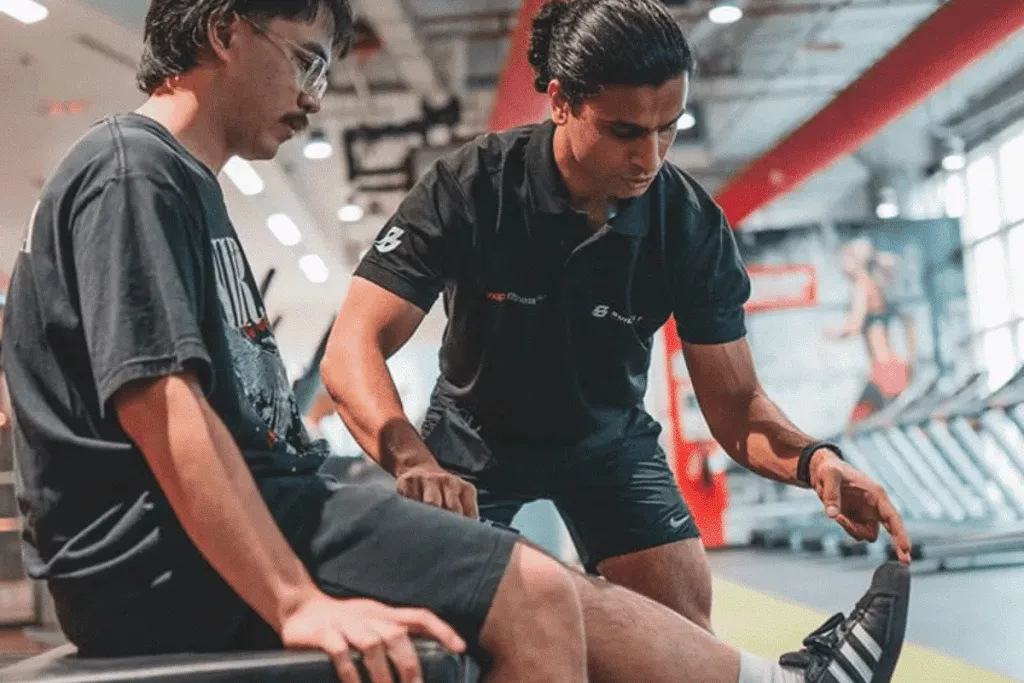
A common misconception is that strength and conditioning is only for athletes or people who are already fit. It is not.
Strength and conditioning is for:
If you are living and working in Dubai Marina and looking for a structured, science-backed approach to fitness, strength and conditioning in Al Marina gives you access to professional programming without having to commute across the city.
Understanding the principles behind the training helps you follow any program with more intention and better results.
The body adapts to whatever stress is placed on it. To keep improving, that stress needs to increase over time. This is the single most important principle in strength training. It means adding weight, increasing reps, reducing rest time, or improving technique on a consistent basis.
Training should be designed around your specific goals. A program built for fat loss looks different from one built for maximum strength, which looks different again from one designed for general health and fitness. A good strength and conditioning coach builds your program around your goal, not a generic template.
Adaptation happens outside the gym, not inside it. Sleep, nutrition, and rest days are not optional add-ons. They are where strength is actually built. Training hard without adequate recovery produces diminishing returns and increases injury risk.
Periodisation means organising training into structured phases, each with a specific focus, so that the body continues to adapt rather than plateau. Most effective programs run in blocks of four to six weeks before shifting the training stimulus.
No two people respond identically to the same program. Factors like training history, body composition, injury history, age, and lifestyle all affect how a program should be designed and progressed.

A well-designed program is built in phases. Each phase has a clear purpose and feeds into the next.
Phase 1: Foundation (Weeks 1 to 4)
The goal here is to establish movement quality, build baseline strength, and prepare the joints and connective tissue for more demanding training.
Training structure:
Key movements:
Phase 2: Strength Development (Weeks 5 to 10)
Once the foundation is in place, the program shifts toward building maximal strength through heavier loads and lower rep ranges.
Training structure:
Key movements:
Weekly split example:
| Day | Focus |
| Monday | Lower Body Strength |
| Tuesday | Upper Body Strength |
| Wednesday | Conditioning |
| Thursday | Rest |
| Friday | Lower Body Strength |
| Saturday | Upper Body Strength + Conditioning |
| Sunday | Rest |
Phase 3: Performance and Conditioning (Weeks 11 to 16)
This phase integrates strength and conditioning more directly, increasing training density and introducing more complex movement patterns.
Training structure:
Key movements:
Training without appropriate nutrition is one of the most common reasons programs stall. Nutrition for strength and conditioning does not need to be complicated, but it does need to be consistent.
Protein:
Protein is the primary nutritional driver of strength and muscle adaptation. The target for anyone in a strength and conditioning program is 1.6 to 2.2 grams per kilogram of bodyweight daily. For a 75 kg person, that is between 120 and 165 grams per day.
Practical protein sources available across Dubai:
Carbohydrates:
Carbohydrates fuel performance. Cutting carbs too aggressively during a strength program reduces training output, slows recovery, and limits strength gains. Prioritise carbohydrate intake around training sessions, before for energy and after for recovery.
Hydration:
In Dubai's climate, hydration is non-negotiable. Dehydration of as little as two percent of bodyweight has been shown to impair strength output and cognitive performance. Aim for a minimum of 3 litres per day, more during summer months or on high-intensity training days.
| Meal | Focus |
| Breakfast | Protein and complex carbohydrates |
| Pre-workout (60 to 90 minutes before) | Light carbohydrate and protein meal |
| Post-workout (within 30 to 60 minutes) | Protein and fast-digesting carbohydrates |
| Dinner | Protein, vegetables, moderate carbohydrates |
| Before bed (optional) | Slow-digesting protein such as casein or labneh |
Knowing what to avoid is as useful as knowing what to do.

Access to professional coaching close to where you live or work has a direct impact on consistency. If getting to training requires a significant commute, sessions get skipped. If training is convenient and scheduled, it gets done.
For residents and professionals based in Dubai Marina and the surrounding areas, strength and conditioning in Al Marina provides structured, one-to-one coaching without the need to travel across the city. BuiltFit works with clients across Dubai Marina, Downtown Dubai, The Springs, and Media City, meeting people where they are and building programs around their schedule, not the other way around.
BuiltFit's strength and conditioning programs are built on five systems designed to remove the guesswork from every aspect of training and lifestyle.
The five systems:
| System | What It Does |
| Grocery System | Removes daily food decisions and reduces unnecessary spending |
| Fast Cooking System | Builds 10 to 15 minute meal habits that support training goals |
| Taste-Based Eating | Stops impulsive and emotional eating without restrictive dieting |
| 1-to-1 Training | Structured, progressive sessions with full accountability |
| Daily Accountability | Prevents the restart cycle that derails most self-directed programs |
Every client at BuiltFit trains one-to-one with a structured program that is adjusted week by week. There are no group classes, no generic templates, and no guesswork. Whether you are looking to build maximum strength, improve conditioning, or achieve a full body transformation, the program is built specifically around you.
H2 - What to Track in a Strength and Conditioning Program
Tracking is what separates consistent progress from repeated plateaus.
| Metric | How to Track | Frequency |
| Strength benchmarks | Weight and reps per exercise | Every session |
| Bodyweight | Morning, fasted | Every 2 to 3 days |
| Body measurements | Tape measure at key sites | Weekly |
| Progress photos | Front, side, back in consistent lighting | Every 2 weeks |
| Energy and recovery | Simple 1 to 10 rating | Daily |
| Sleep quality | Hours and quality rating | Daily |
Look at trends over two to three weeks rather than day-to-day readings. Short-term fluctuations in weight and performance are normal and do not reflect the actual direction of progress.
Strength training focuses specifically on increasing muscular force and size through resistance-based exercises. Strength and conditioning is a broader framework that includes strength development alongside cardiovascular conditioning, mobility, power, and athletic performance. It produces a more complete and functional result.
Most people notice measurable improvements in strength within three to four weeks of starting a structured program. Visible body composition changes typically become apparent between weeks six and ten, depending on nutrition, consistency, and starting point. Performance improvements in conditioning can be felt within the first two weeks.
For most people, three to four sessions per week produces excellent results, particularly in the first eight to twelve weeks. As the program progresses, four to five sessions per week allows for greater volume and faster adaptation. Training frequency should be matched to recovery capacity, not just ambition.
Yes. BuiltFit's strength and conditioning programs in Al Marina are designed to meet clients at their current level. Beginners start with a foundation phase that prioritises movement quality and progressive loading before advancing to more demanding training. No prior experience is required.
A strict diet is not necessary, but consistent nutrition is. Hitting a daily protein target, staying hydrated, and managing calorie intake around your goal are the three non-negotiables. BuiltFit's approach includes a taste-based eating system that makes consistent nutrition practical without making meals feel restrictive.
A standard gym membership gives you access to equipment. BuiltFit gives you a system. Every client has a structured program, one-to-one sessions with a qualified coach, and daily accountability. The approach is built around efficiency, so busy professionals in Dubai can achieve results without spending hours in the gym.
Yes. Properly programmed strength and conditioning is one of the most effective tools for recovering from musculoskeletal injuries. BuiltFit also offers pre and post-rehabilitation services, which use a structured three-phase approach to help clients regain full function after injury before transitioning into a full strength and conditioning program.
Most people in Dubai are training hard. Far fewer are training smart.
Strength and conditioning in Al Marina, delivered through BuiltFit's one-to-one coaching model, gives you the structure, accountability, and programming to make every session count. Whether you are starting from scratch, returning after a break, or pushing through a plateau, the right program makes the difference.
Book a free consultation with BuiltFit today and get a program built around your goals, your schedule, and where you are right now.